Common Causes of Foggy Window Repair and When to Call a Pro
Why Foggy Windows Happen and What It Means for Your Home
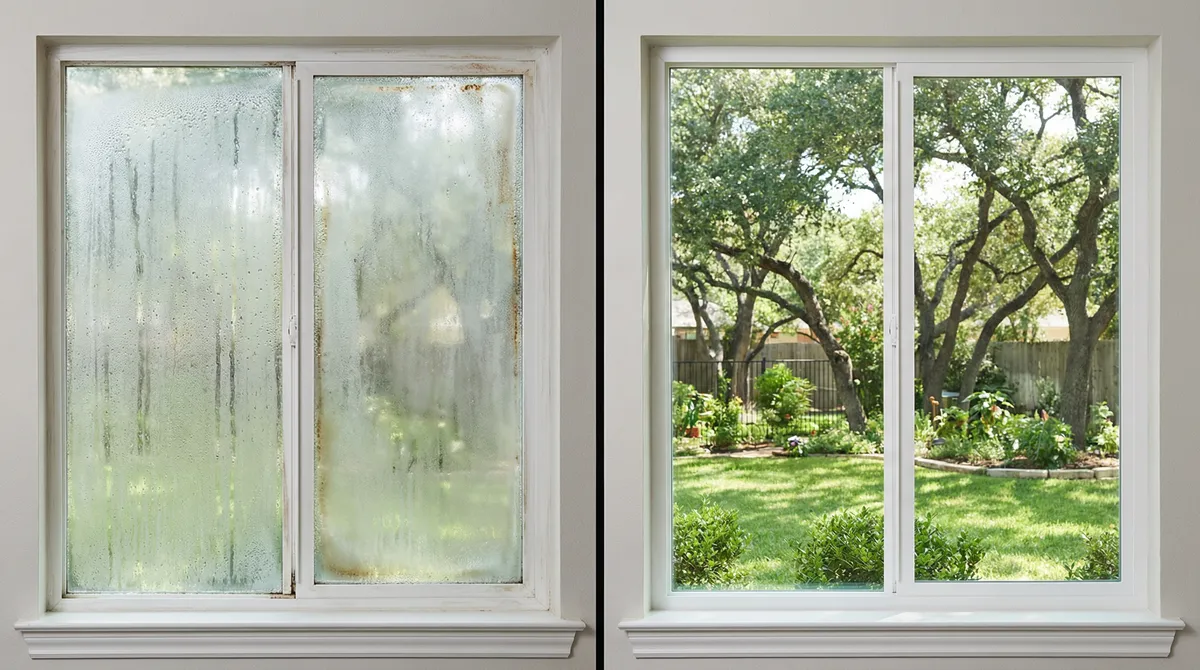
If you have double-pane windows that look cloudy or hazy between the glass panes, you are dealing with a failed seal. That fog is trapped moisture, and it signals that the insulated glass unit has lost its airtight barrier. Foggy window repair is not always straightforward. Sometimes a simple fix works, but other times the whole unit needs to go. Knowing the difference saves time and money, especially here in DFW where temperature swings put constant stress on window seals.
How Insulated Glass Units Work
Modern windows are not single panes of glass. They are insulated glass units, or IGUs, made of two or three panes separated by a spacer and sealed around the edge. The space between panes is filled with an inert gas like Argon gas, which slows heat transfer and improves energy efficiency. A layer of low-E coating on one of the glass surfaces reflects infrared light, keeping your home cooler in summer and warmer in winter. These components work together to reduce your energy bills and keep the interior comfortable.
But the whole system depends on the seal. The edge seal is a combination of sealant and a spacer that holds the panes apart and keeps moisture out. Inside the spacer sits a material called desiccant, which absorbs any trace moisture that might be present during manufacturing. Over time, the sealant can degrade, especially under thermal stress from hot Texas summers and cool winters. Once the seal breaks, moisture infiltration begins. You see the fog, and the window loses its insulating value.
Glass Seal Failure: The Root Cause
Glass seal failure is the most common reason a window fogs up. It happens when the edge seal cracks or pulls away from the glass. The desiccant inside the spacer can only absorb so much moisture. Once it is saturated, any additional humidity condenses on the inside surface of the glass panes. That condensation creates the foggy appearance.

Thermal stress accelerates this process. In DFW, we get days that start at 70 degrees and climb to over 100. The glass expands and contracts. The sealant, which is usually a rubbery material, can lose its flexibility over years of cycling. When it hardens, it cracks. A window that faces south or gets direct afternoon sun will often fail before a shaded window. That is why you might see foggy windows only on one side of the house.
Can You Repair a Foggy Window Yourself?
There are do-it-yourself window defogging kits on the market. Most work by drilling a small hole in the glass spacer, flushing out the moisture, and installing a vent that lets the unit breathe. These kits can clear the fog temporarily. But they rarely restore the original insulation value. Once the gas fill is gone, the window's R-value drops. You end up with a clear view but a cold pane in winter and a hot one in summer.
Another option is ultrasonic cleaning, a process where the whole unit is removed and the glass is cleaned with high-frequency sound waves. This method works well for some windows, but it is labor-intensive and not always cost-effective compared to glass replacement. If the low-E coating has been damaged by moisture or the tempered glass has micro-cracks, cleaning will not fix the underlying problem.
For a permanent solution, most homeowners and professionals lean toward glass replacement. That means removing the old insulated glass unit and installing a new one. The frame stays in place. The new unit comes with fresh desiccant, a proper gas fill, and a factory seal that should last another 15 to 20 years.
When to Call a Professional for Foggy Window Repair
If the fog is limited to one window, and the frame is in good shape, a local expert can often replace just the glass. That is where DFW window repair services come in. A company like Apex Windows, which specializes in foggy glass repair and commercial glass, can give you a free estimate and walk you through the options. They will check the entire unit, including the weather seal and the frame condition, before recommending a course of action.
For commercial glass, the stakes are higher. Office buildings often have large panes that are expensive to replace. Window restoration techniques, such as sealant reapplication or IGU refurbishment, might extend the life of the unit for a few more years. But if the fog is widespread across multiple windows, it is usually more economical to replace them all at once. A professional will measure the glass, order the correct tempered glass or laminated glass, and ensure the new unit meets building codes.
The Role of Window Warranty
If your windows are under a window warranty from the manufacturer or installer, foggy glass might be covered. Many warranties cover seal failure for 10 to 20 years. But they do not cover damage from impact, improper installation, or lack of maintenance. If you bought a house with existing foggy windows, check the warranty paperwork. Some warranties are transferable to a new owner. A professional can tell you whether the fog is a warrantable defect or a sign that the window has reached the end of its service life.
Preventing Foggy Windows
You cannot stop the sun, but you can reduce thermal stress by keeping your home's temperature stable. Extreme temperature differences between inside and outside put more strain on the seals. Using blinds or curtains on south-facing windows during peak sun can slow the aging of the sealant. Regular cleaning of the window frames and ensuring the weep holes are clear also helps the weather seal stay intact.
If you are building a new home or replacing windows, choose IGUs with a high-quality sealant and a thicker spacer. Some manufacturers offer a "warm edge" spacer that reduces heat loss and puts less stress on the seal. Pay attention to the gas fill. Argon gas is standard, but some premium units use Krypton for even better insulation. The low-E coating should match your climate. For DFW, a coating that reflects solar heat while letting visible light through is a good choice.
Foggy Window Repair: A Real-World Example
A friend of mine in Plano noticed fog in three windows on the west side of his house. He tried a window defogging kit on one window. It cleared the fog for about six months, then the fog returned, worse than before. The kit had removed the Argon gas, and the desiccant was already exhausted. He ended up calling a DFW window repair company. They replaced all three IGUs. The total cost was less than he expected, and the windows stayed clear. The lesson is that foggy window repair often means replacing the unit, not patching it.
Is It Worth Repairing or Should You Replace the Whole Window?
Sometimes the frame is damaged too. If the wood or vinyl frame has rot, rust, or warping, replacing just the glass does not make sense. In that case, a full window replacement is the better investment. But if the frame is solid and the fog is the only issue, glass replacement is usually the most cost-effective route. A professional can assess the frame condition during a free estimate.

Commercial glass presents its own challenges. Large panes may require special ordering and handling. Tempered glass is common in commercial settings because it is stronger and safer. But it cannot be cut after tempering, so precise measurement is critical. A commercial glass specialist knows how to handle these nuances.
Final Thoughts on Foggy Window Repair
Foggy windows are not just an eyesore. They reduce energy efficiency, increase your utility bills, and can lead to further damage if moisture seeps into the frame. The key is to diagnose the cause: glass seal failure, moisture infiltration, or a compromised desiccant. From there, decide whether a DIY kit, professional window restoration, or full glass replacement is the right move. For most homeowners in DFW, professional foggy window repair is the safest and most lasting solution. A free estimate from a trusted company like Apex Windows gives you the information you need without any pressure. Whether it is a single residential window or a large commercial glass project, getting the seal right the first time saves you from repeating the work later.